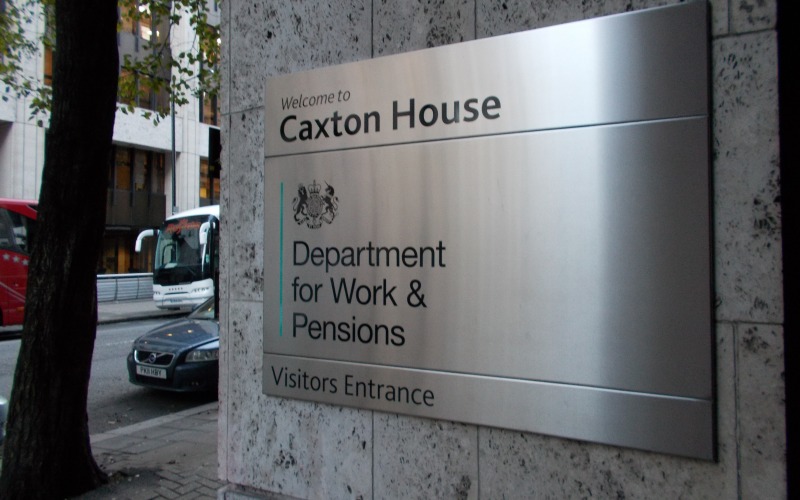
Department for Work and Pensions (DWP) staff and managers deliberately inflicted psychological harm on benefit claimants, engaged in unofficial sanctioning targets, and pushed disabled people into work despite the risk to their health, shocking new testimony has revealed.
The evidence comes from new interviews with 10 civil servants who worked for the Department for Work and Pensions (DWP) and its contractors under the coalition government between 2010 and 2015.
They spoke – on the condition of strict anonymity – to academics from Sheffield Hallam University, who have now shown how the introduction of a more punitive social security system, with harsher benefit sanctions and conditionality, inflicted years of “institutional violence” on claimants between 2010 and 2015.
The authors, Dr Jamie Redman and Professor Del Roy Fletcher, believe it is the first time that research has explained how DWP workers have been able to commit such harmful acts on benefit claimants in vulnerable and precarious situations.
The two academics built on the work of the Polish sociologist Zygmunt Bauman, who described how modern bureaucracies can produce psycho-social factors that enable ordinary people to carry out harmful practices.
They describe how a change in DWP policy through the new Conservative-Liberal Democrat coalition government elected in May 2010 pressured DWP staff to refer more claimants to have their benefits sanctioned.
The policy changes also saw the performance of jobcentre staff measured by “off-benefit flows” – the number of claimants who stopped receiving an out-of-work benefit – even if those people had not secured a job.
This helped lead to a huge increase in sanctioning rates between 2010 and 2013 – reaching more than one million sanctions in 2013 and rising about 345 per cent above their 2001-08 average level.
For their research, Redman and Fletcher interviewed a JobcentrePlus (JCP) manager; three JCP front-line staff members; one Work Programme front-line worker who had previously worked for JCP; one DWP decision-maker; and four Work Programme front-line staff.
They were told how “top-down” pressure on staff – through sanctioning tables and off-flow targets that were “legitimised” by the government – acted as a “moral anaesthetic” which “made invisible the needs and interests” of the claimants they were sanctioning.
This allowed workers to view their caseloads with what Bauman called “ethical indifference”.
One JCP worker described how staff would often treat claimants with “disrespect” and use psychological harm as a technique to reduce the number of people claiming benefits, “pushing them until they either just cleared off because they couldn’t take the pressure or they got sanctioned”.
An executive officer in another JobcentrePlus office also said that some staff tried to antagonise claimants in the hope that they would drop their claims.
While DWP denied at the time that there were any sanctioning targets, the former DWP staff interviewed for the research said there was increasing expectation “from above” to hand out sanctions, which led to the formation of “local target regimes”.
One JCP executive officer said staff would come into the canteen and say: “Well I’ve got my [sanctions] target for the week.”
Another worker described how non-English speaking claimants would be persuaded to sign “claimant commitments” that meant they had to provide evidence of their work search activities in English.
When they were unable to provide this evidence, because their English was not strong enough, they were sanctioned.
One manager tried to persuade staff to sanction more claimants by telling them: “It’s your money! It’s your taxes that they’re living off! You know, you should be sanctioning them!”
One of those interviewed said that this kind of “stigmatising” language became increasingly common in formal meetings.
But these tactics were not restricted to JCP offices.
Those who worked for outsourced Work Programme providers, who were under financial pressure to find job “outcomes” for claimants, described how managers pressured them to “push” disabled people into work.
One former Work Programme adviser told the research team: “[I had] a lovely guy who I really felt for who had mental health issues and the day after I had to reluctantly mandate him to something – he attempted suicide.
“I also had another lady who we pushed into work and it made her that ill she had a fit in her new job and was admitted to hospital.”
Another Work Programme adviser said that some colleagues seemed to thrive on their ability to inflict harm and “enjoyed the stick”.
In their paper, Violent Bureaucracy, published last week in Critical Social Policy, Redman and Fletcher describe how the government and media had created and promoted a “hostile” environment for claimants, with the help of frequent “scrounger rhetoric” designed to blame claimants for austerity.
This laid the groundwork for the introduction of a more punitive welfare-to-work system, with harsher sanctions and conditionality, and allowed the institutional violence of the DWP regime to thrive.
Their research, they write, “seeks to explain how ordinary people carrying out their daily duties in employment service offices were able to implement cruel and inhumane social security reforms”.
Redman told Disability News Service (DNS) that he believed the research could also help explain more recent, disturbing interactions between claimants and staff working for DWP and its contractors, including evidence that emerged in January at the inquest into the death of Philippa Day.
And he pointed to the huge number of claimants who have relied on DWP support during the COVID-19 crisis, mostly through universal credit.
He warned that historical evidence suggests that punitive reforms tend to thrive in the years after periods of economic crisis, as governments attempt to reduce the number of claimants and push them back into work.
After DNS asked DWP to respond to the article, a DWP spokesperson said: “This journal article does not reflect the compassionate support offered by our jobcentres day in, day out.
“Providing the best possible customer service and care is at the heart of what we do.
“We don’t want to sanction anyone and no one is sanctioned unless they fail to meet their agreed claimant commitment without good reason.”
A note from the editor:
Please consider making a voluntary financial contribution to support the work of DNS and allow it to continue producing independent, carefully-researched news stories that focus on the lives and rights of disabled people and their user-led organisations.
Please do not contribute if you cannot afford to do so, and please note that DNS is not a charity. It is run and owned by disabled journalist John Pring and has been from its launch in April 2009.
Thank you for anything you can do to support the work of DNS…
 Secrecy of DWP’s board of experts set up to examine ‘economic inactivity’ and long-term sickness
 One in five assessors have not had vital safeguarding training, despite years of DWP deaths
 Cuts to disability benefits for those who cannot work ‘is recipe for greater hardship’ and ‘will put lives at risk’